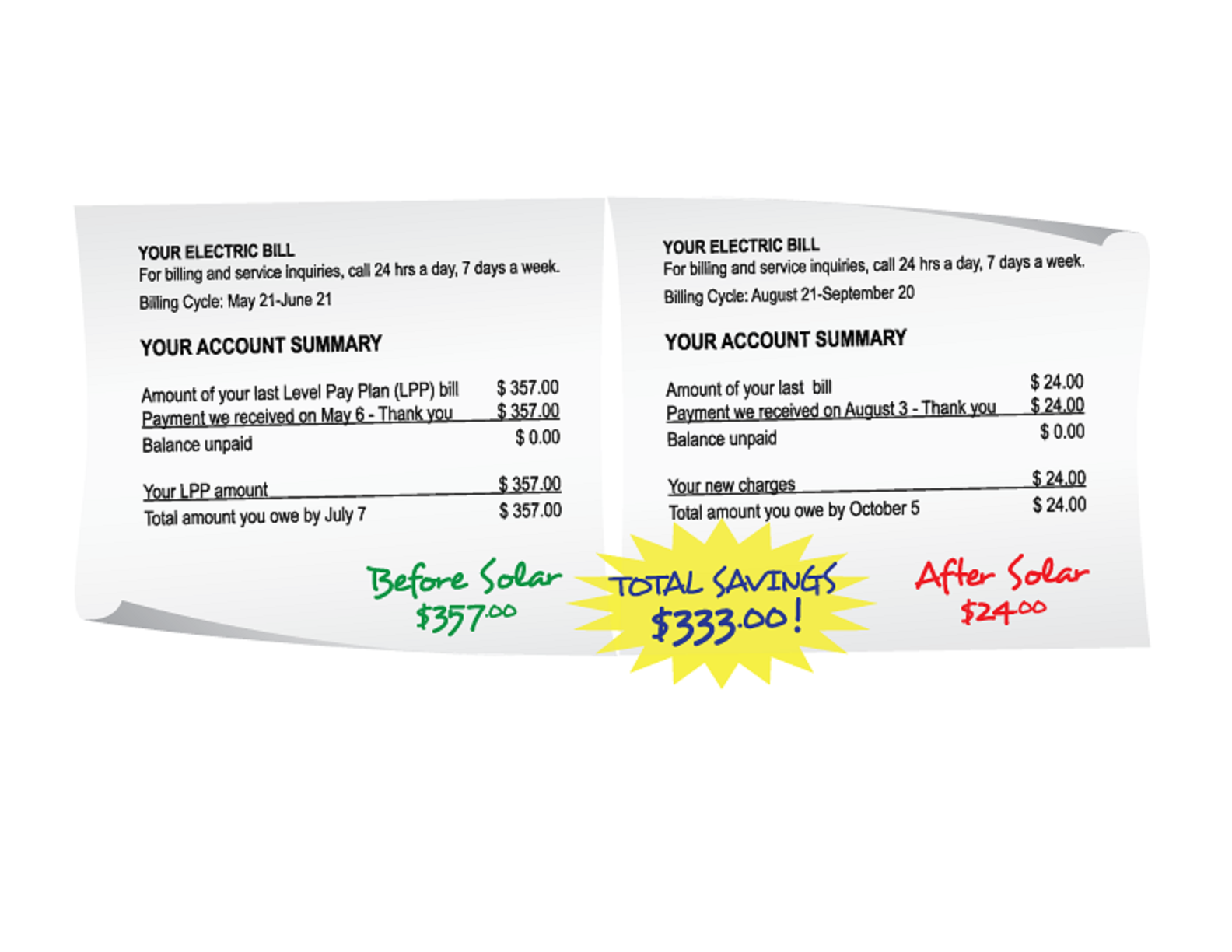
We are all interested in saving money. Energy costs continue to rise and will rise in the future. Installing a solar energy system will save you money. But how exactly does it do this? It does this through a process known as “net metering”. When your home or business is tied to the electrical grid and your solar power panels are producing more electricity than you are using the excess power generated is fed back into the electrical grid. This causes your meter to spin backwards, giving you a credit with your utility company.
Of course, when you are using more power than your solar system is generating your meter runs forward. If your system is designed to produce the same amount of power as you use on a yearly basis the end result will be zero, you will pay nothing for your electric power usage.
The average home can easily supply upwards of 75% of its own electrical use. Any extra power can be sold back to your electric utility. A big advantage of solar energy is that it is pollution free. Installing solar power in your home and business will drastically reduce your energy costs and fight global warming at the same time.
Solar power systems are modular, giving you the ability to add solar power panels over time, growing the generating capacity of your system over time.
Investing in a solar electric system for your home or business typically achieves a return of between 8 and 12%—or more. In today’s investment climate, that makes solar a very attractive use of funds that might otherwise be sitting in a savings account. Electricity rates have increased an average of 6% every year in the last five years. When you go solar, you lock in low electricity prices. As utility rates rise, your investment becomes even more valuable.
At Horizon Solar Power we understand that the decision to go solar is a big one, that’s why we have several options for you to make sure you get the most out of your decision. First, you should think about if you would rather own or lease your system. There are benefits of doing both; it depends on your financial as well as electrical needs. Read more about your options here.